Mission Assurance Stack
Sense. Predict. Stabalize
Protect. Deorbit.
A layered approach to Spacecraft resiliance
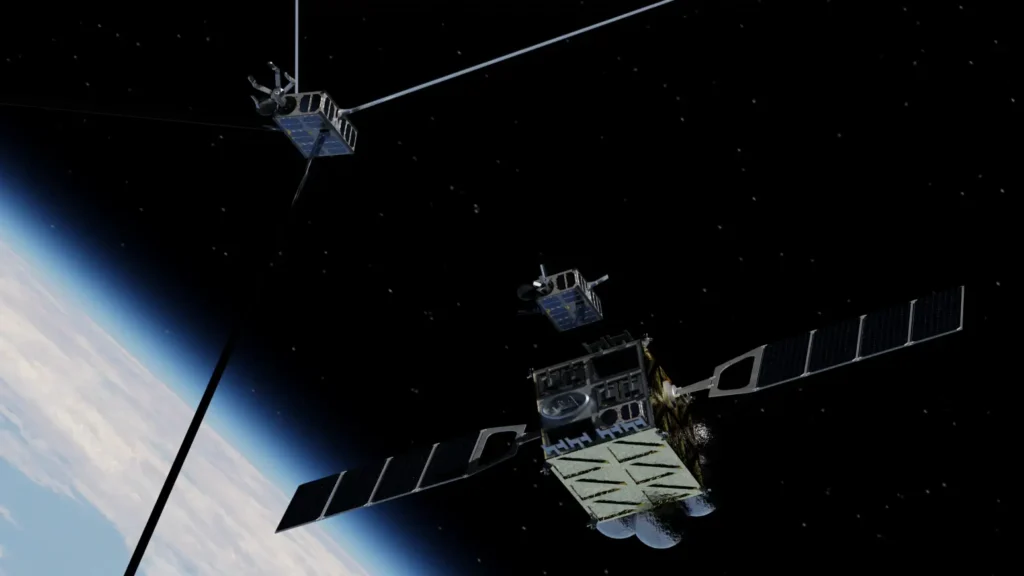
The Orbotic Mission Assurance Stack integrates in-situ environmental sensing, onboard intelligence, passive maneuvering, and active debris remediation—
protecting spacecraft and orbital environments across the full mission lifecycle.
Why our stack works: Each layer delivers standalone value. Together, they form a resilient, fault-tolerant architecture.
WIND senses the environment, ARGUS predicts emerging risk, SmartFins enables passive
maneuvering, and RIDDANCE protects orbital regimes—delivering mission assurance from first
orbit to final orbit.
We reduce space debris with our cost-effective, propellant-free D3 device, meeting FCC deorbiting regulations.
We advance human progress in LEO with innovative space technology, focusing on debris remediation and satellites.
Our Products
D3 - Deorbit Drag Device
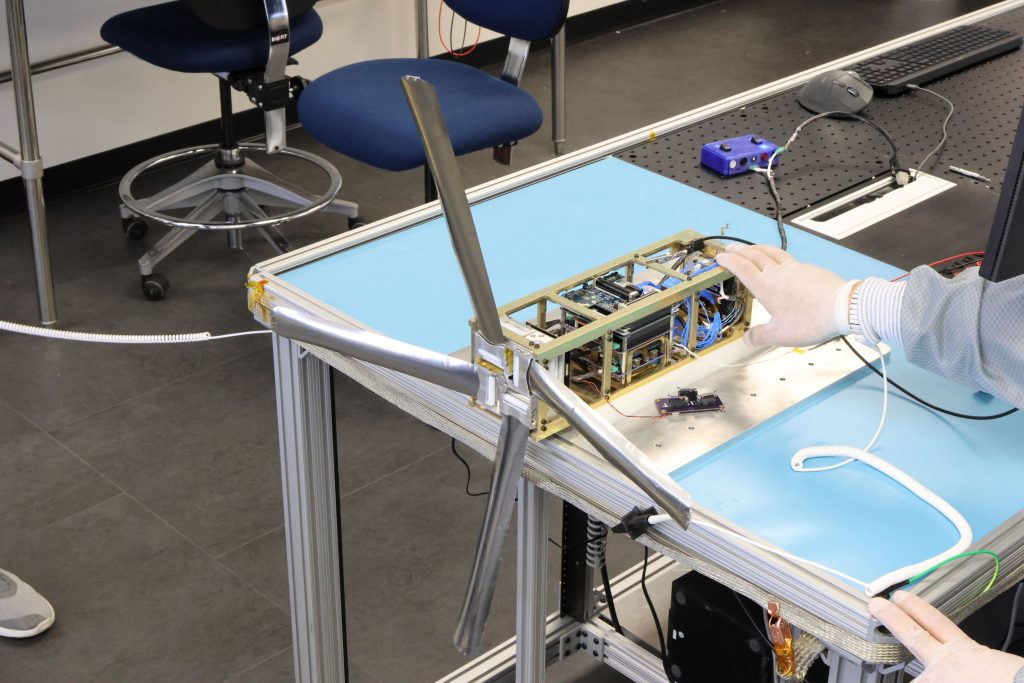
A passive, propellant-free deorbit solution that controls spacecraft orientation and reentry. D3 performs 80% of thruster functions at only 10% of the cost, making it ideal for CubeSats, SmallSats, and constellation missions that require compliance with FCC orbital debris rules. 🛰 Focus on your mission and leave the deorbiting to us.
Wind ion neutral density (WIND)
Our NOAA-funded WIND space weather sensor measures in-situ ion and neutral particle densities to improve orbit prediction, drag modeling, and collision avoidance. By providing real-time space weather data from low Earth orbit, WIND enhances SSA (Space Situational Awareness) and supports both government and commercial space operators.
RIDDANCE
An advanced dual-net capture system that safely removes or redirects defunct satellites and space debris. RIDDANCE supports the expanding in-space servicing, assembly, and manufacturing (ISAM) sector — turning today’s debris into tomorrow’s opportunity.
Our Product
Focus on Your Mission And Leave the Deorbiting to Us.
Orbotic Systems, Inc. Introduces the Deorbit Drag Device, the D3. Our device provides a safe, cost-effective method to speed up spacecraft disposal after its mission science is complete.
D3 modulates spacecraft drag force, while controlling orientation and orbital decay. It can be used to maneuver a satellite or constellation, deorbit a satellite, and target the re-entry location. D3 does this passively, without any rocket propellant, making it the ideal deorbit solution.
- SIMPLE
- Reliable
- Low Cost
- Non-propulsive
Meet Our Professional Team
ERIK T. Long
CEO & Co-Founder
Orbotic Systems, INC.
Jane Ielmini
COO & Co-Founder
Orbotic Systems, INC.
Scott Ryll
CFOP
Orbotic Systems, INC.
LAtest SBIR and Funding for Sustainable Space
NOAA
WIND Sensor
On-board space weather collection device for smallsats.
NASA
D3 Funding and Partnership
Cleaning Up Space junk with deorbit device for smallsats.
NOAA Announces Tech Partnerships, orbits systems INC. Wins PHASE II.
NOAA invests $11M in small businesses to advance innovative technologies - Technology Partnerships Office.
Startup NASA Features Series: Orbotic Systems.
ORBOTIC SYSTEM Highlights
- July 2022
D3 Launched Aboard SpaceX CRS-25 Mission.
- September 2022
Nanoracks deploys D3 from ISS.
- March 2023
Official D3 Product Launch with Maverick Space.
- June 2023
Winner of NASA SBIR Phase 1
Winner of NOAA SBIR Phase 1
- January 2024
Developed Generation 2 Deorbit Drag Device (D3)
- February 2024
Contracted and Delivered D3 (Gen 2) to Axient Space for Launch
- June 2024
Winner of NASA SBIR Phase 1
Winner of NOAA SBIR Phase 2
Orbotic Systems is a privately held company based in Thousand Oaks, California. Our vision is a future where space infrastructure — civil, commercial, and defense — operates predictably, safely, and sustainably across its entire mission lifecycle.